Fitness is the new "Cool" thing in India
A few years ago, fitness in India was never really a priority for most people. Unless someone wasn't visibily unhealthy, every one used to consider themselves as fit. Nobody cared about protein, exercise, sleep, or overall fitness. Gym was a place only for Bodybuilders, John Abaram inspired folks or actors.
I still remember hearing a common perspective "Khao pio aur mast raho!!!"
But something has started changing.
Today, more people are joining gyms, running marathons, tracking calories, wearing fitness trackars, and taking their health seriously. All the Cults across Bengaluru and Delhi are packed with people. Fitness is no longer just a niche hobby, it’s becoming a lifestyle and even a status symbol.
I don’t think the only reason behind this shift is the desire to live a disease-free life. Social media and society have also played a massive role in changing how Indians perceive fitness. Today, when someone posts a picture of themselves working out, running a marathon, or waking up at 5 AM for the gym, it creates a perception that this person is disciplined, responsible, and working on themselves. Naturally, this influences others too. Sometimes, it may even trigger a sense of insecurity, the feeling that “Maybe I should start taking care of myself too?” And honestly, there’s nothing wrong with that. Humans are naturally influenced by the people around them. Society has always worked this way. We learn, improve, and evolve by watching others.
In many ways, social media has turned fitness into something aspirational. People no longer see health as just avoiding diseases in old age they see it as confidence, discipline, attractiveness, productivity, and self-respect. We will refer to this as the new cool effect through out the blog.
Now let's talk about its effect and ofcourse business!
If someone was building a fitness startup in India 10–15 years ago and pitched it to a VC, the reaction would probably have been “Do people in India even care about fitness that much?”, “Who’s going to buy this?”, “Indians only care about price.” And honestly, at that time, those questions would have made sense.
But after the cool effect, Questions that you will be asked will include "What value are you gonna add?", "How are you gonna differentiate yourself", "Can this scale beyond metro cities?", These are a good sign of a sector about to thrive.
There are many Indian companies and startup that are adding value and making money in this space but I think these 2 really standout and I wanna focus on these for this blog:
1. Peakst8
I first heard about Peakst8 in December 2025.
Someone told me that a fitness event was happening at midnight in the basement parking of Orion Mall, where people had to participate in teams of two or more.
At first, I ignored it.
It sounded cool, sure, but who would actually show up at midnight, form teams, and work out in a parking basement?
I moved on.
But later on the night of it, my Instagram feed was filled with stories and posts from the event.
That sparked genuine curiosity in me, What the hell is this thing, and how did it manage to pull so many people?, The “cool factor” definitely played a role here.
But even then, one question stayed in my mind:
Why would someone pay to work out in a basement doing basic running and rowing, activities they could already do in their gym or during a morning run at Lalbagh?
The answer, I realized, is much deeper than fitness itself. It is validation, competitiveness, and community.
When you participate in events like No Parking, you get timings, rankings, and performance stats that you can compare with others. You know where you stand. There’s a form of validation attached to it, something a regular gym session usually cannot provide.
Then comes the competitive energy. Seeing hundreds of people pushing themselves at the same time creates an adrenaline rush that’s hard to replicate alone. The environment itself pushes you to perform better.
And finally, there’s the social aspect. You get a medal after finishing the event. You post stories. You become part of something people perceive as difficult, disciplined, and aspirational.
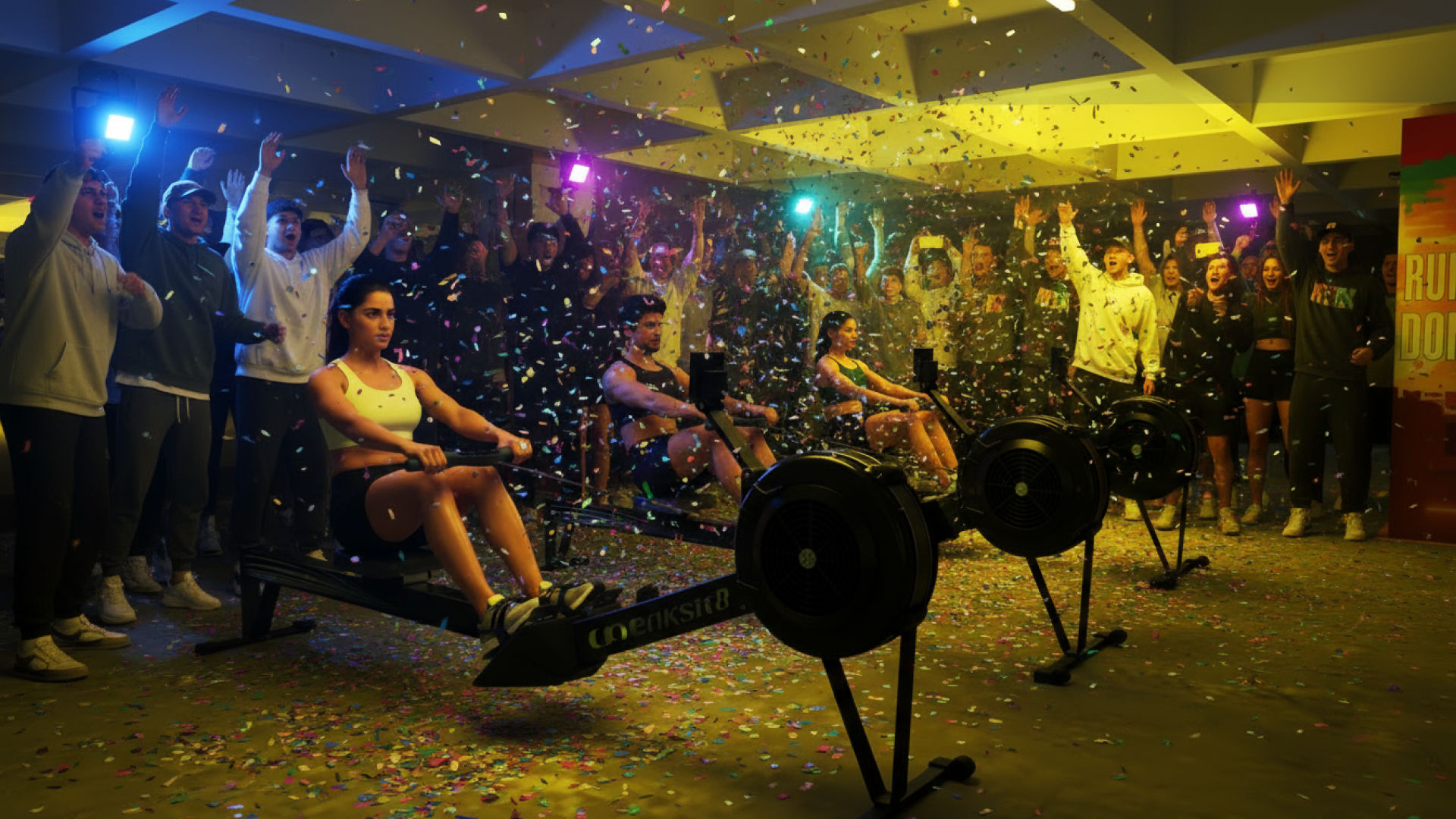
It feels cool to be associated with it plus it something more engaging than a workout in a gym. Probably the reason for packed run club activities on the weekends.
Peakst8 Festival takes this idea even further.
Honestly, it felt like the “Coldplay concert” of fitness.
It was a day-long festival filled with workout events, competitions, music, brand experiences, and talks from people like P. V. Sindhu, Nikhil Kamath, and Nithin Kamath.
Participants could choose different workout formats and take part in any two of them, which made the entire experience feel personalized rather than rigid.
What shocked me the most, though, was the scale. Around 3,000 people showed up.
The thing that makes Peakst8 different from events like HYROX is its positioning. Peakst8 is targeting everyday athletes. You do not need to be an elite runner or train for months specifically for the event. Anyone who goes to the gym a few times a week, plays a sport casually, or goes for weekend runs can participate and feel included.
Peakst8 being backed by Zerodha and Rainmatter definitely gave it an initial community boost, but I don’t think that alone explains its success.
The real reason it worked is because it tapped into a much larger cultural shift happening in India, correct placement and excellent team. Fitness is no longer just exercise. It is becoming identity, social currency, entertainment, and community.
2. The Health Factory:
I remember when I was a kid, my mother would sometimes send me on my cycle to buy a packet of bread from the local kirana store so she could make sandwiches.
I used to stand there looking at the entire bread rack filled with different brands and packets. Back then, the decision was simple, which bread was fresher, softer, cheaper, or gave more quantity. Nobody really cared about ingredients.
Slowly, awareness around refined flour (maida) started spreading, and my mother began telling me to buy brown bread instead.
One day, out of curiosity, I decided to actually read the ingredients list on all those packets.
And to my surprise, most “brown breads” were barely different from white bread.
Only a small portion of refined flour had been replaced with wheat flour, probably just enough to make the bread look brown and appear healthy. The entire bakery aisle suddenly felt like clever marketing built around unhealthy products.
As the “cool effect” around fitness started growing, people also began caring more about what was going into their stomachs. This side of the movement was much more health-oriented.
Nobody wants to spend hours working out only to cancel it out by eating unhealthy food afterward. And once people started becoming more conscious about fitness, they naturally became more aware of nutrition as well. Suddenly, terms like calories, refined sugar, seed oils, preservatives, and gut health started entering everyday conversations.
This created a powerful positive feedback loop.
The idea was actually very simple, No maida, No unnecessary chemicals Just bread made with better flour and cleaner ingredients. But the smartest part was their positioning. They did not try to make it a luxury product that only a small premium audience could afford. Instead, they priced it slightly above regular bread,expensive enough to signal better quality, but still affordable enough for the average urban consumer to consider switching.
They first listed at quick commerce, demand increased with time and slowly offline availability increased, They also did a lot of experimentation like protein bread, ragi bread, multigrain bread, cakes and rusks which further expanded category.
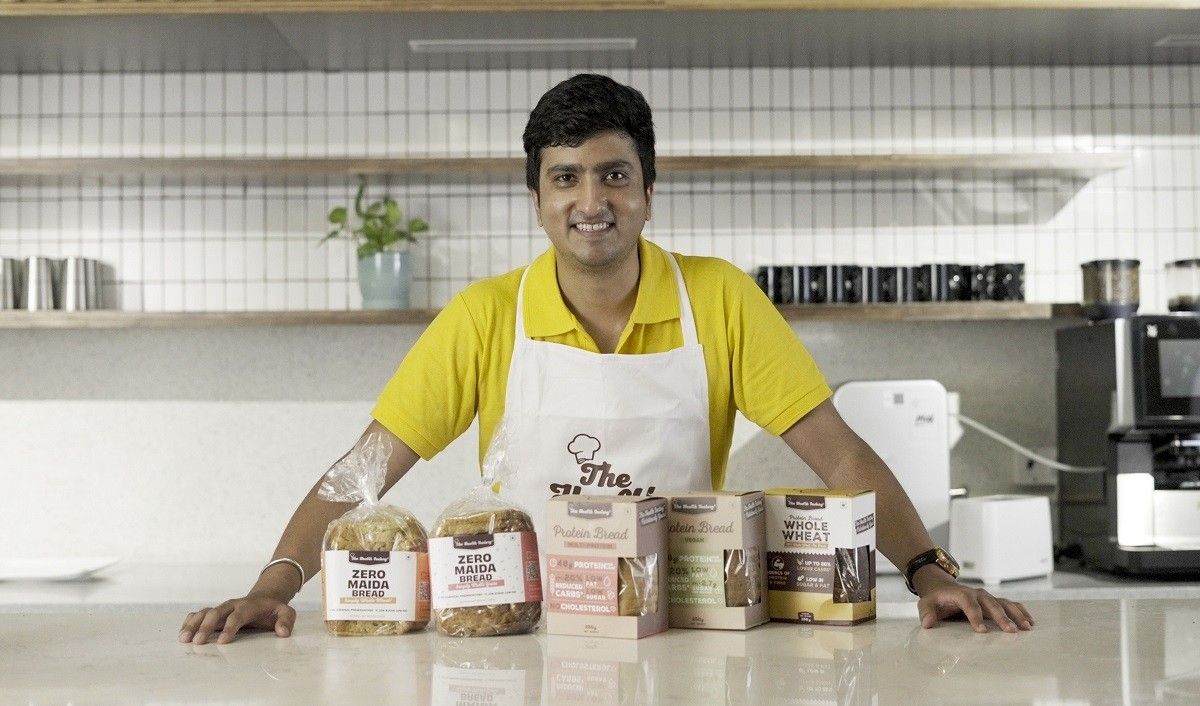
They recently crossed 250 Crores rupees in yearly revenue, 50X than the initial pitch projections and raised rounds from VCs like PeakXV.
Idea is simple, good food and decent price, this combo will always work out.
Outro: The fitness market in India is growing because of the cool effect and probably one of the best space to build in if you can differentiate yourself. It is estimated to have a CAGR of ~15 percent and reach ~INR 37,700 crore (US$4.5 billion) by 2030. Add to this only 0.8% people in India go to gym compared to 25% of US, by 2030 this number is expected to touch 2% (BLR Cults already packed btw) which will further drive the feedback loop for brands like Peakst8 and The Health Factory.
Signing out - Devansh